Travel Website

Context
People plan trips independently so they don’t have to rely on a travel agency, can save money on tickets, and stay flexible during the trip. This kind of planning usually involves buying plane/train tickets, booking hotels, arranging transportation within the country, and choosing places to visit (sights/attractions, amusement parks, restaurants).
Сustomer pain points
Planning a trip like this requires using multiple resources. For example:
- to buy flight tickets, people use Skyscanner;
- to figure out which attractions to visit, they use Google Search and Google Maps;
- to book accommodation, they use Airbnb.
This takes a lot of time and energy, so trip planning becomes exhausting and doesn’t feel enjoyable.
Task
A web service where users can set their trip preferences and receive a day-by-day travel plan. All paid items in the plan (e.g., flights, hotels, attraction tickets) can be purchased directly within the same service.
Research
Individual Interviews
4 individual interviews conducted
16 questions
“I don’t mind searching — the exhausting part is stitching everything together into a realistic day‑by‑day plan.”
“I keep jumping between tabs, notes, and maps, and at some point I lose track of what I’ve already decided.”
“The hardest part is figuring out how to get from A to B without wasting half the day on transport.”
“I’ve made mistakes before — wrong dates, attractions closed, or tickets sold out — and it ruins the mood.”
Research findings
- Most travelers plan independently to stay flexible and control budget, but end up using 3–6 different services for flights, stays, maps, and activities.
- The biggest pain is assembling everything into a coherent day‑by‑day plan (timing, locations, transport) rather than finding options.
- Planning is time‑ and energy‑consuming due to constant context switching, comparison, and decision fatigue.
- Logistics + costs are the hardest parts: how to move between spots, how long it takes, and what the trip will cost per day / total.
- Errors are common (wrong dates, unrealistic schedules, closed attractions, missed pre‑bookings), creating stress and rework.
Ideate
User JTBD
- When I’m planning a trip, I want all the information to be gathered in one service, so I don’t have to switch between multiple platforms.
- When I have my parameters set, I want to get a day-by-day itinerary with things to do, places to eat, how to move between locations, and estimated costs, so I can confidently understand the plan and budget.
- When the itinerary includes paid items (flights, accommodation, tickets, transport), I want to purchase everything directly from the same service, so I can complete my trip preparation in one place without switching between platforms.
Key product hypothesis
- If we combine trip parameters, route, map, and bookings in one service, users will plan faster because they currently lose time switching between multiple platforms.
- If we show cost per item + daily total + trip total, users will feel more confident and convert more because pricing is currently unclear and scattered.
- If we bundle paid items (flights, hotels, attraction tickets) into a single trip cart + checkout, purchases will increase because users prefer not to repeat the process across multiple sites.
User flow

Prototype
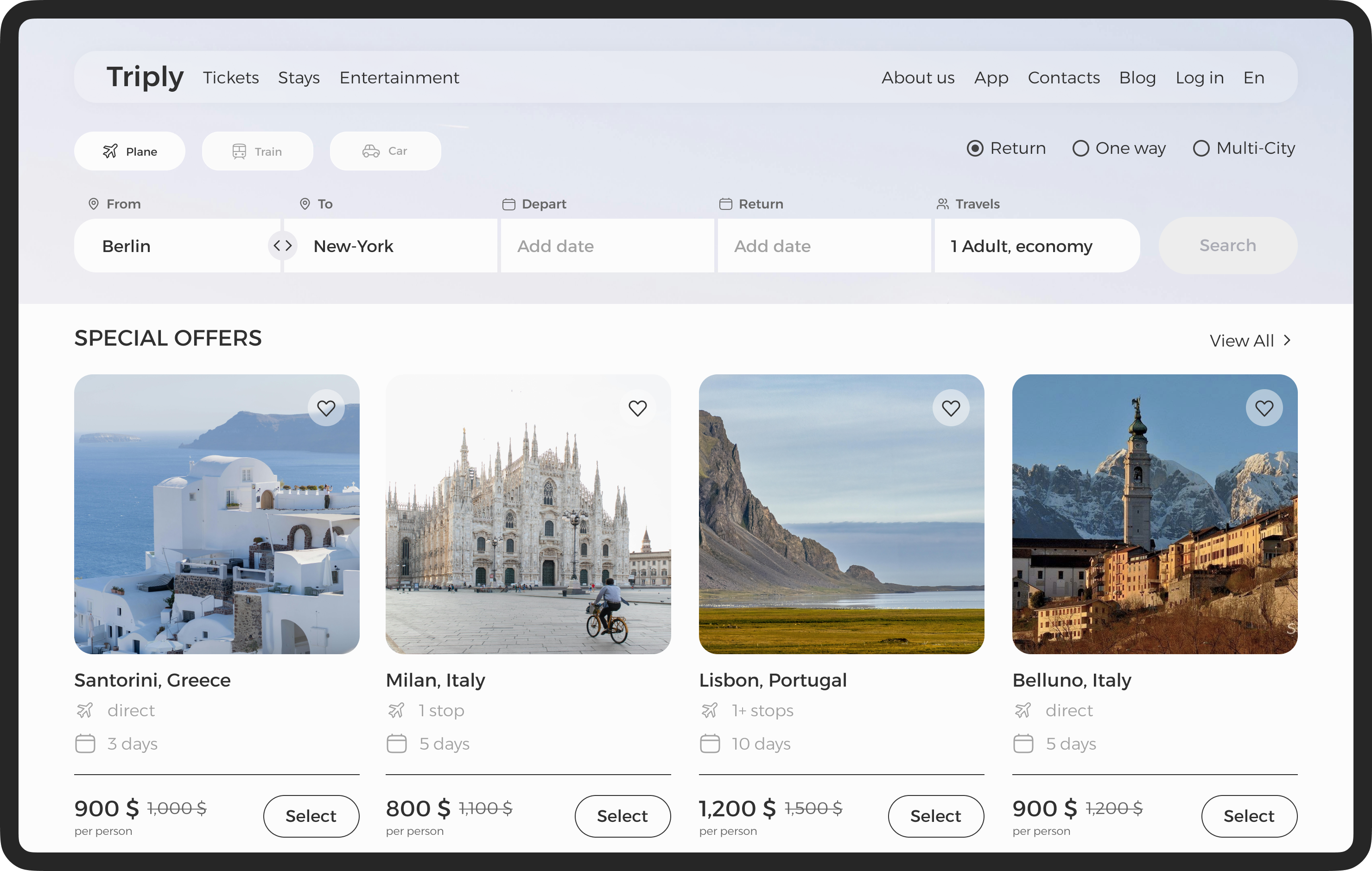
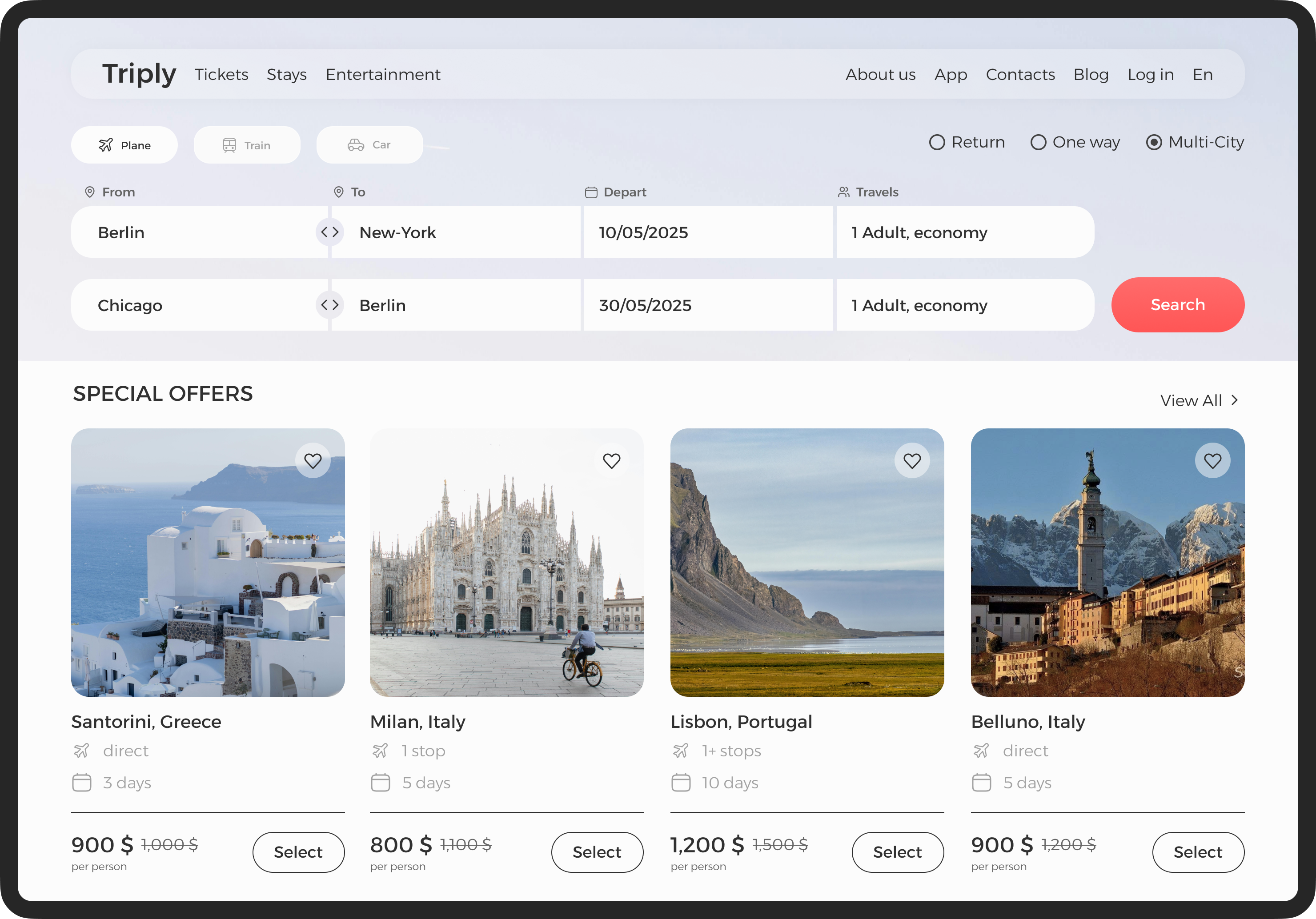
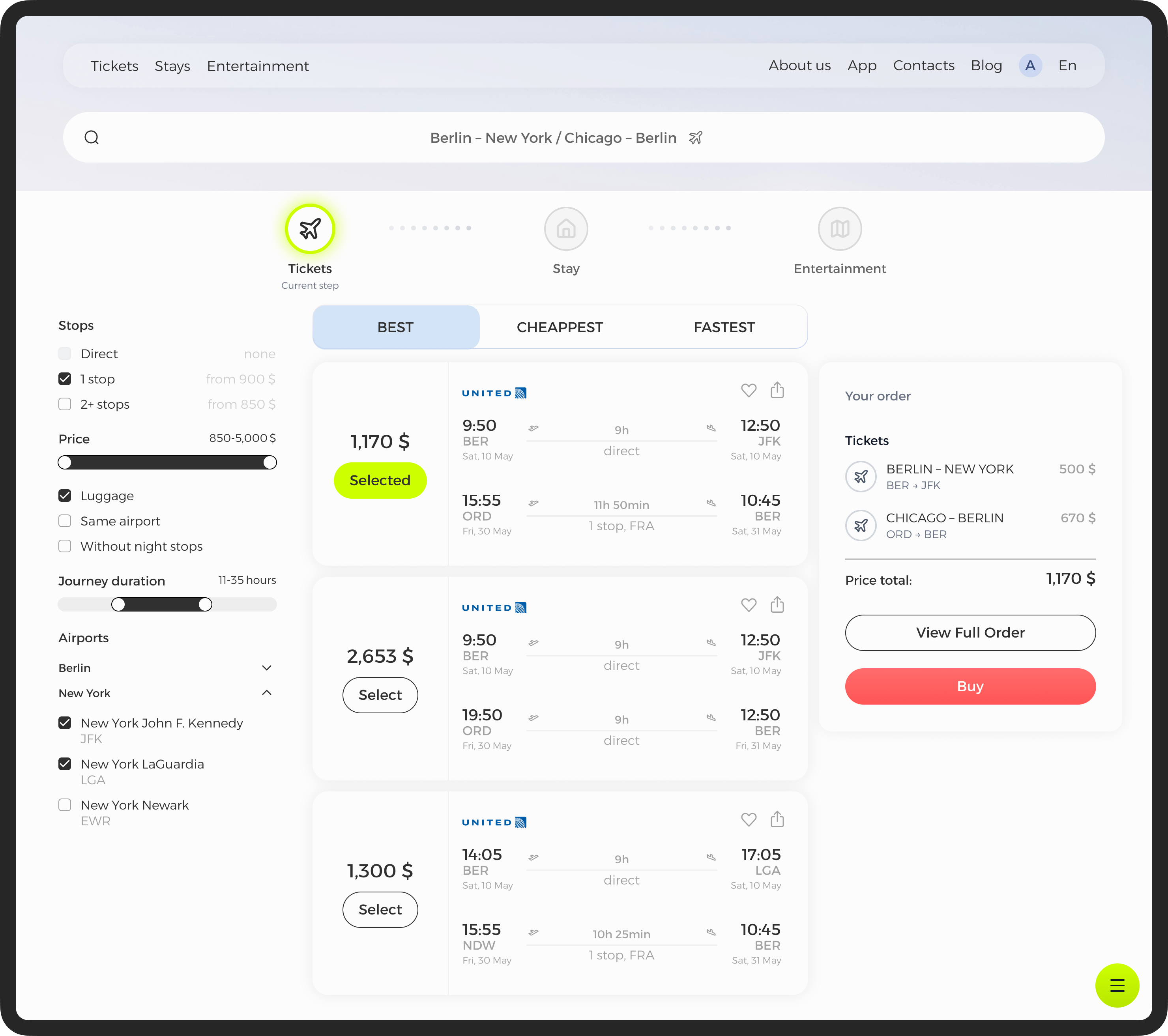

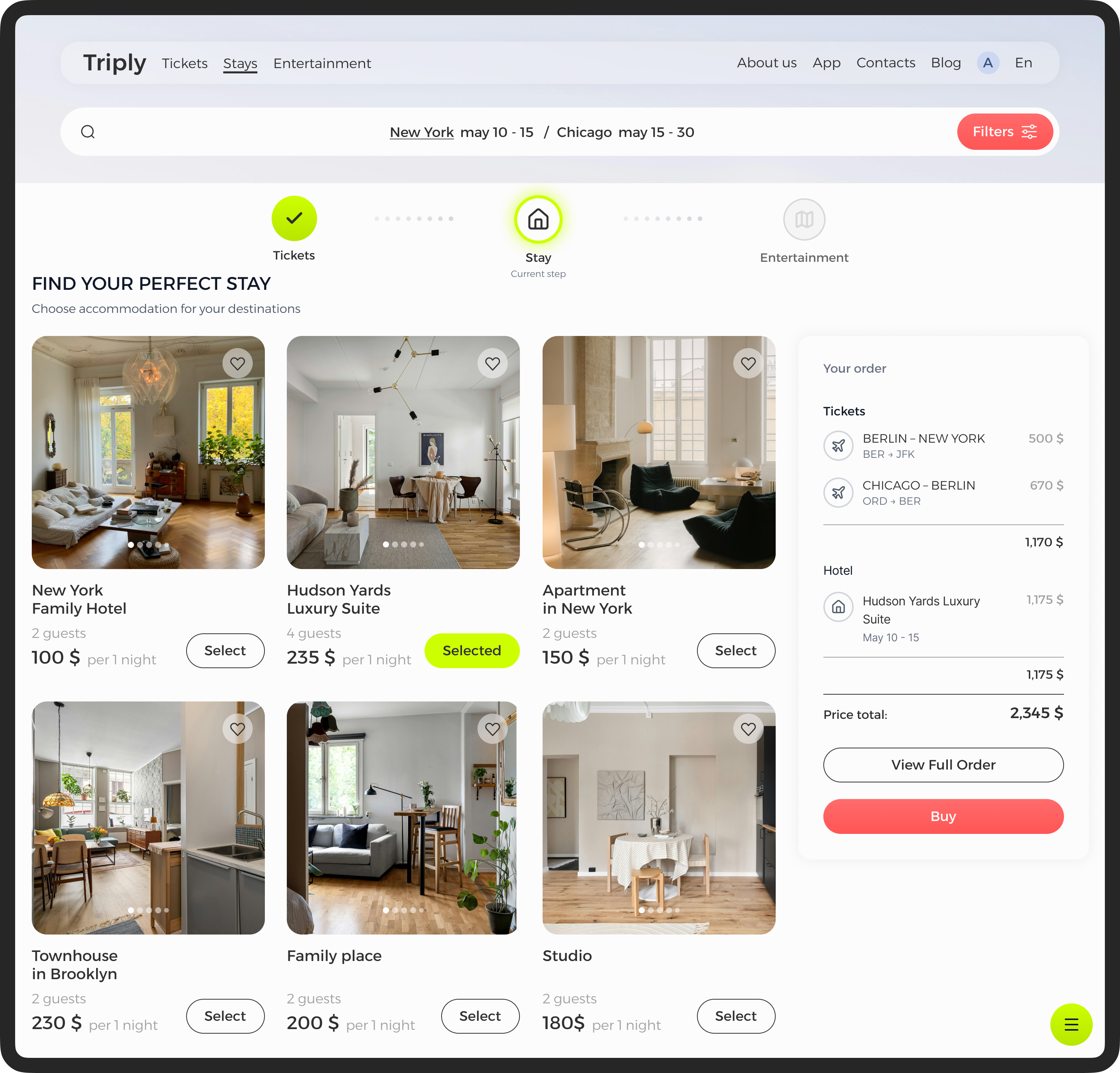
Adaptive
Results
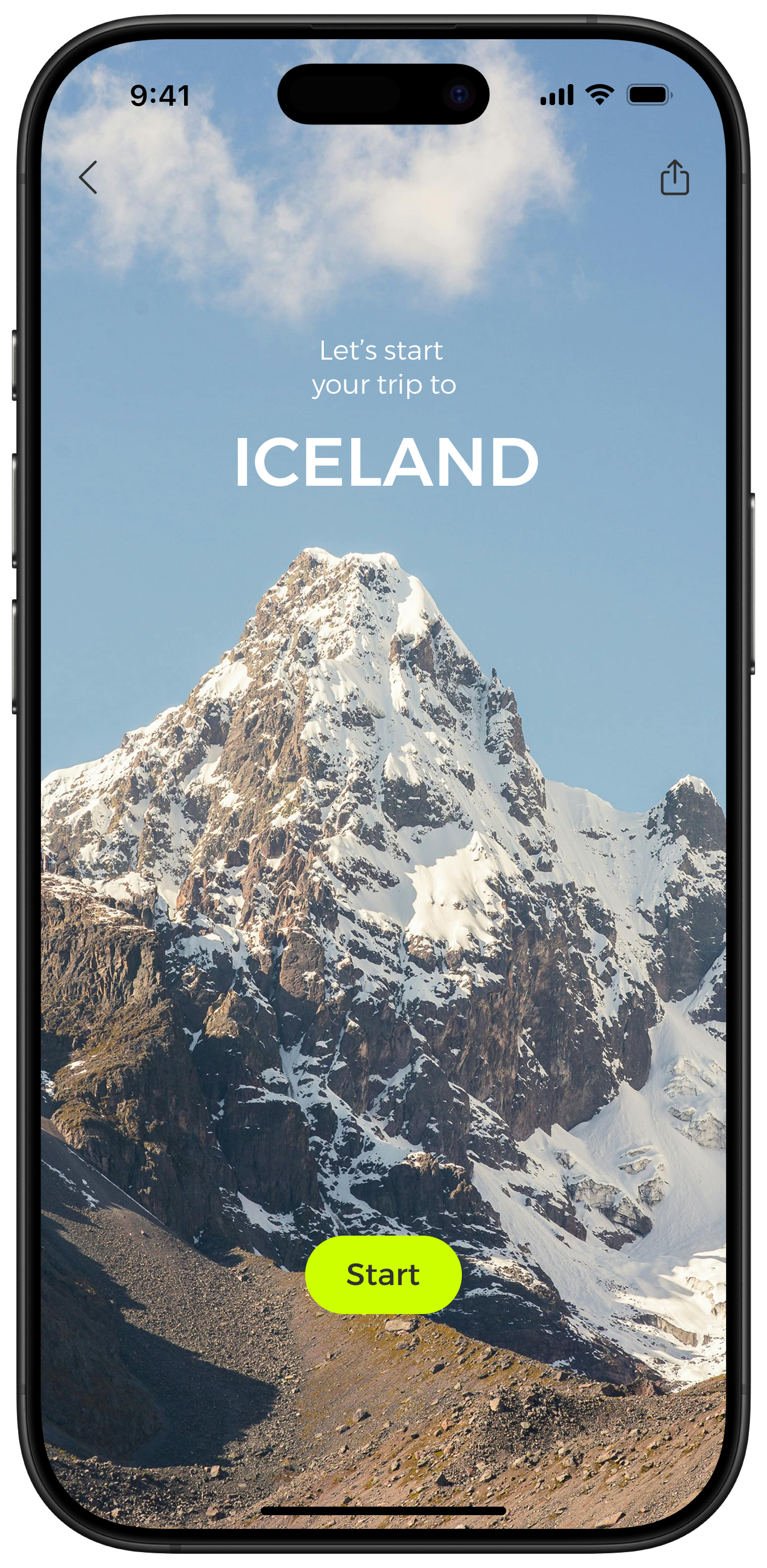
- Start screen (Trip details input)
Users set the core trip parameters: destination(s), number of days, number of travelers, and preferred transportation mode. The screen sets the scope for itinerary generation and budgeting. - Ticket selection (with trip details panel)
A results list for flights/trains with a fixed side panel that always shows trip details and total pricing. After selecting a ticket, a pop-up confirms the chosen option and key details before proceeding. - Accommodation selection
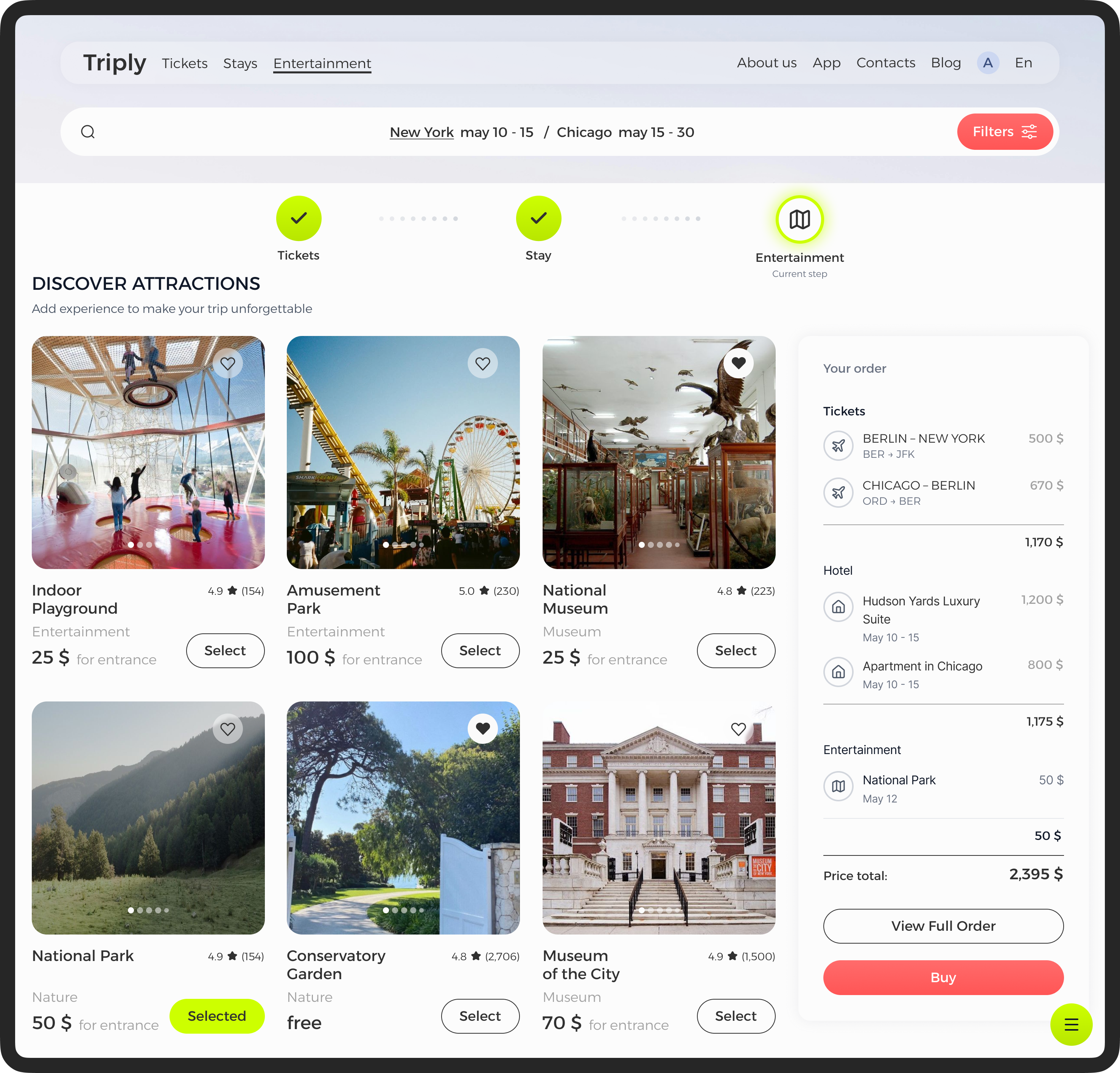
Curated stays aligned with the itinerary (dates, location, budget). Each option shows price, key amenities, and how it fits the route (e.g., distance to planned areas). - Activities & entertainment selection
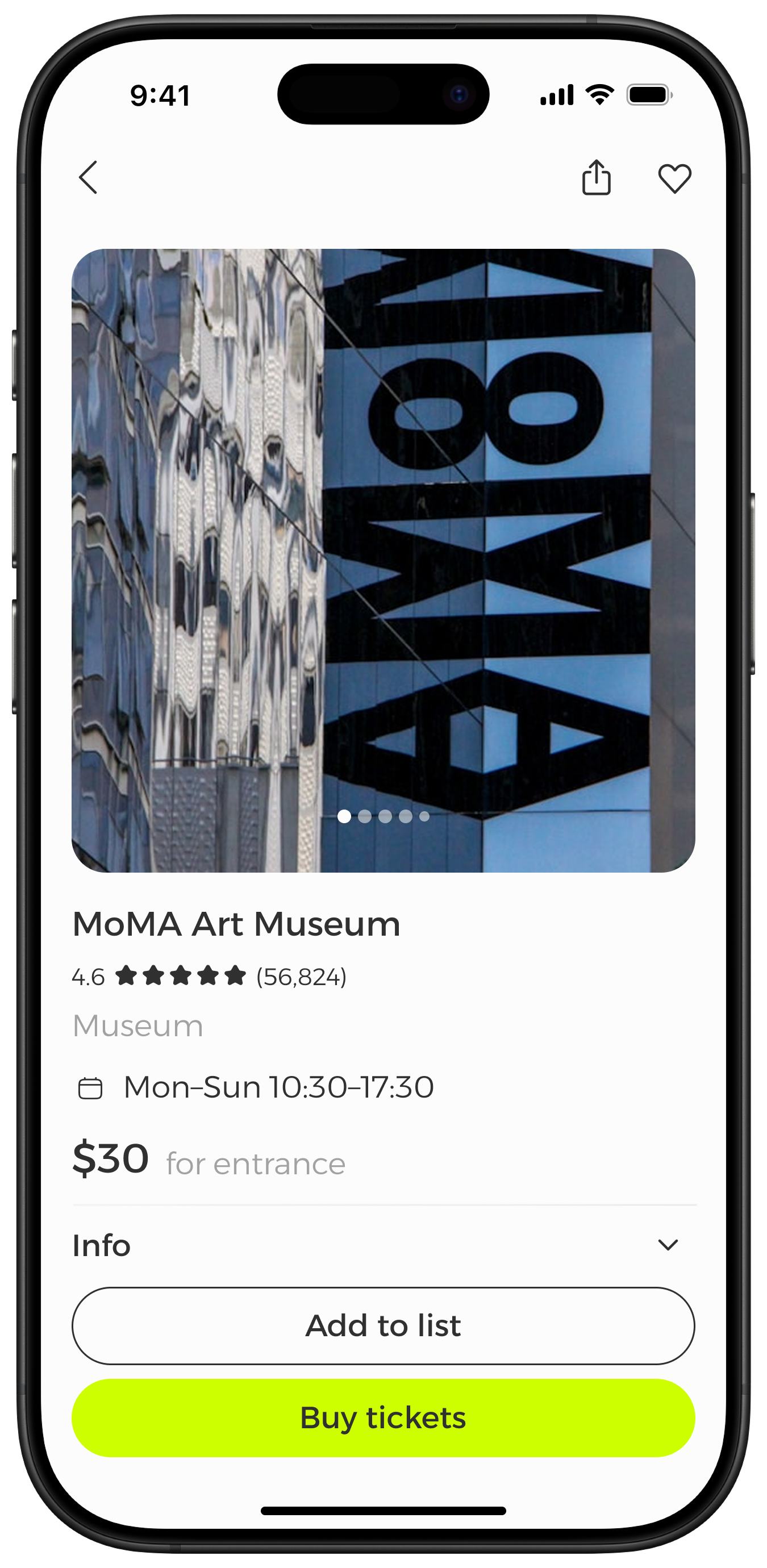
Day-relevant attractions, experiences, and restaurants. Every item includes pricing and basic planning info (duration, location, ticket requirements). - Day-by-day itinerary summary
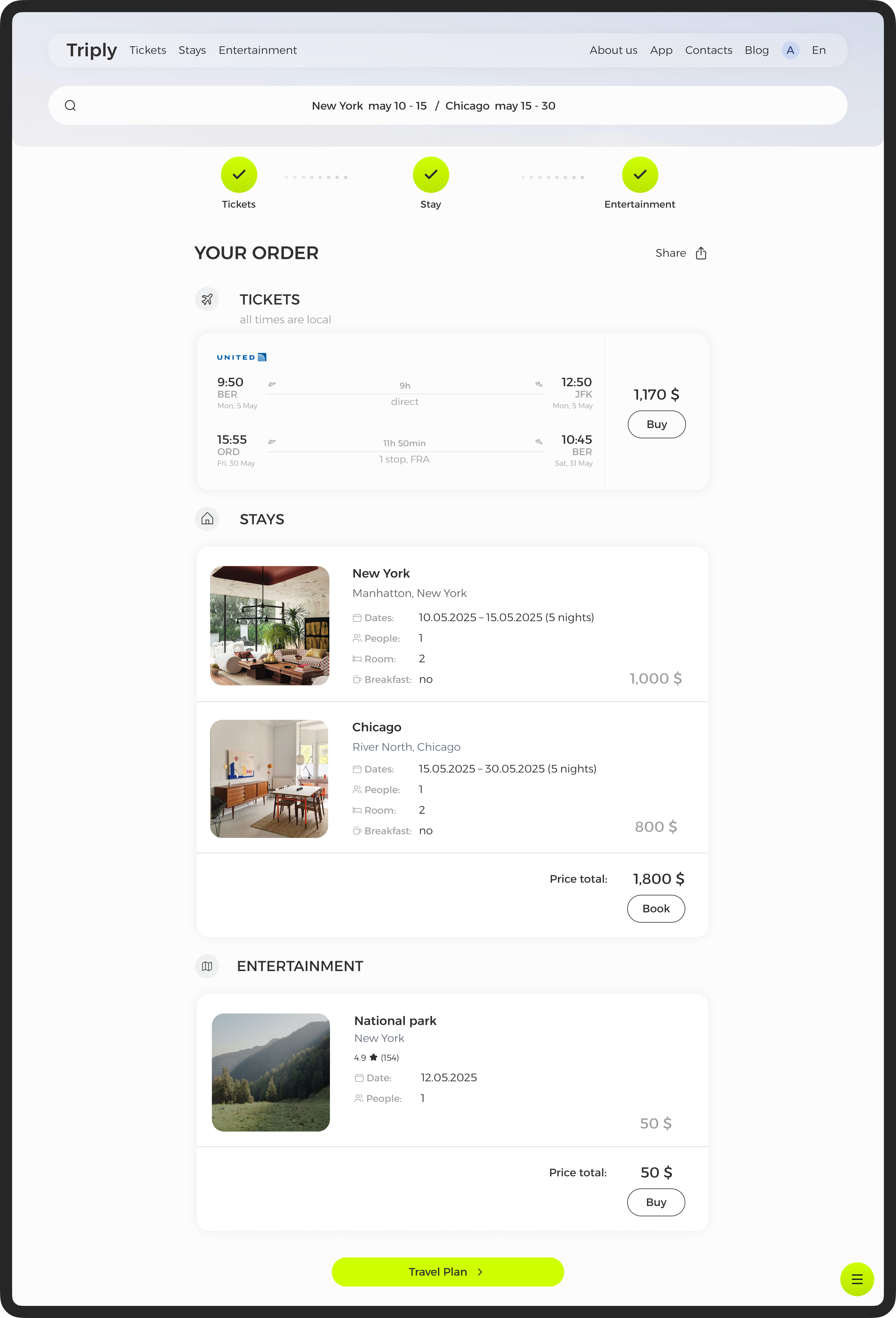
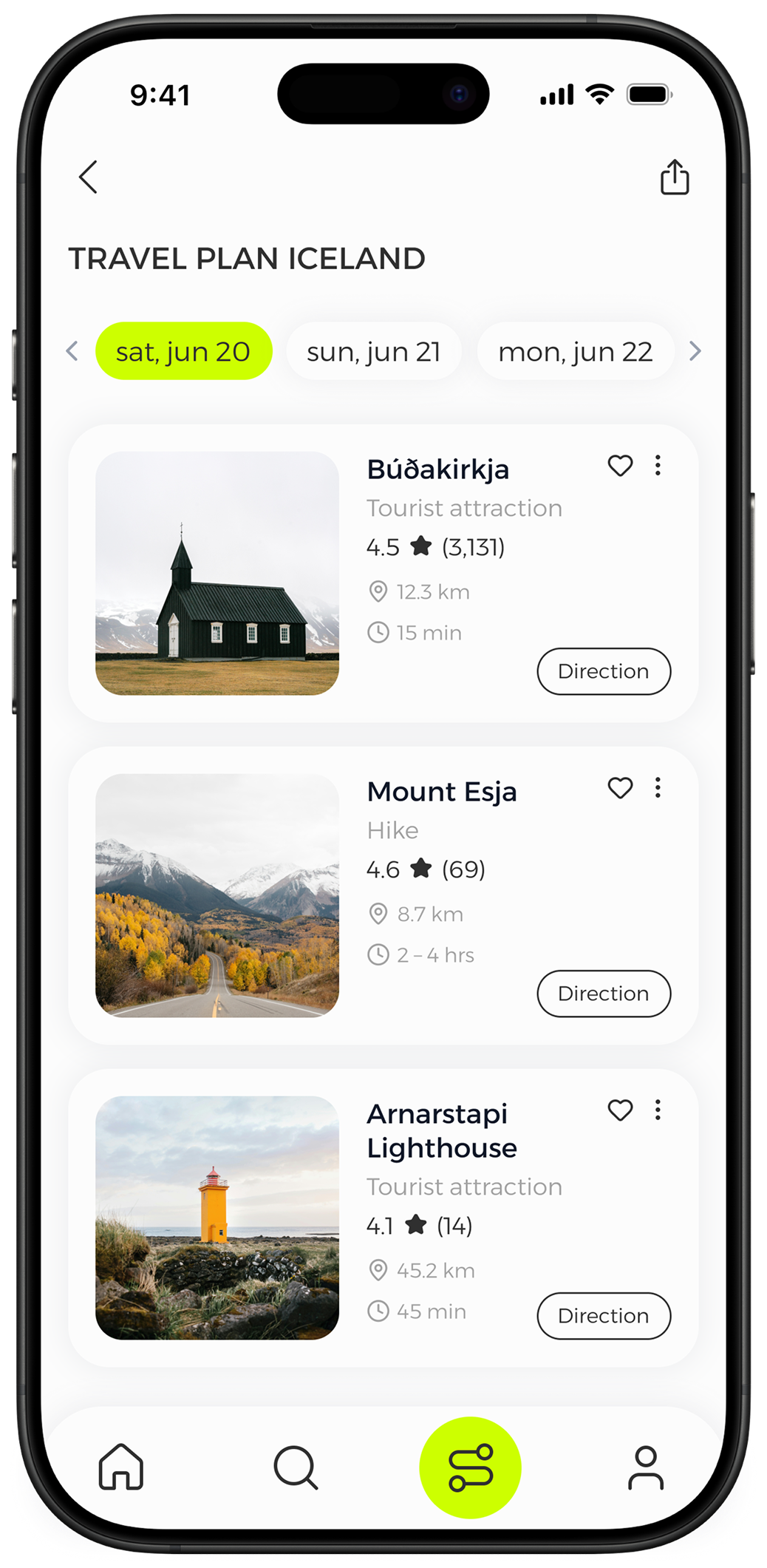
A structured plan for each day with selected bookings, estimated timings, transport between stops, and daily + total cost breakdowns. Users can review the full trip “in one view.” - Route map view
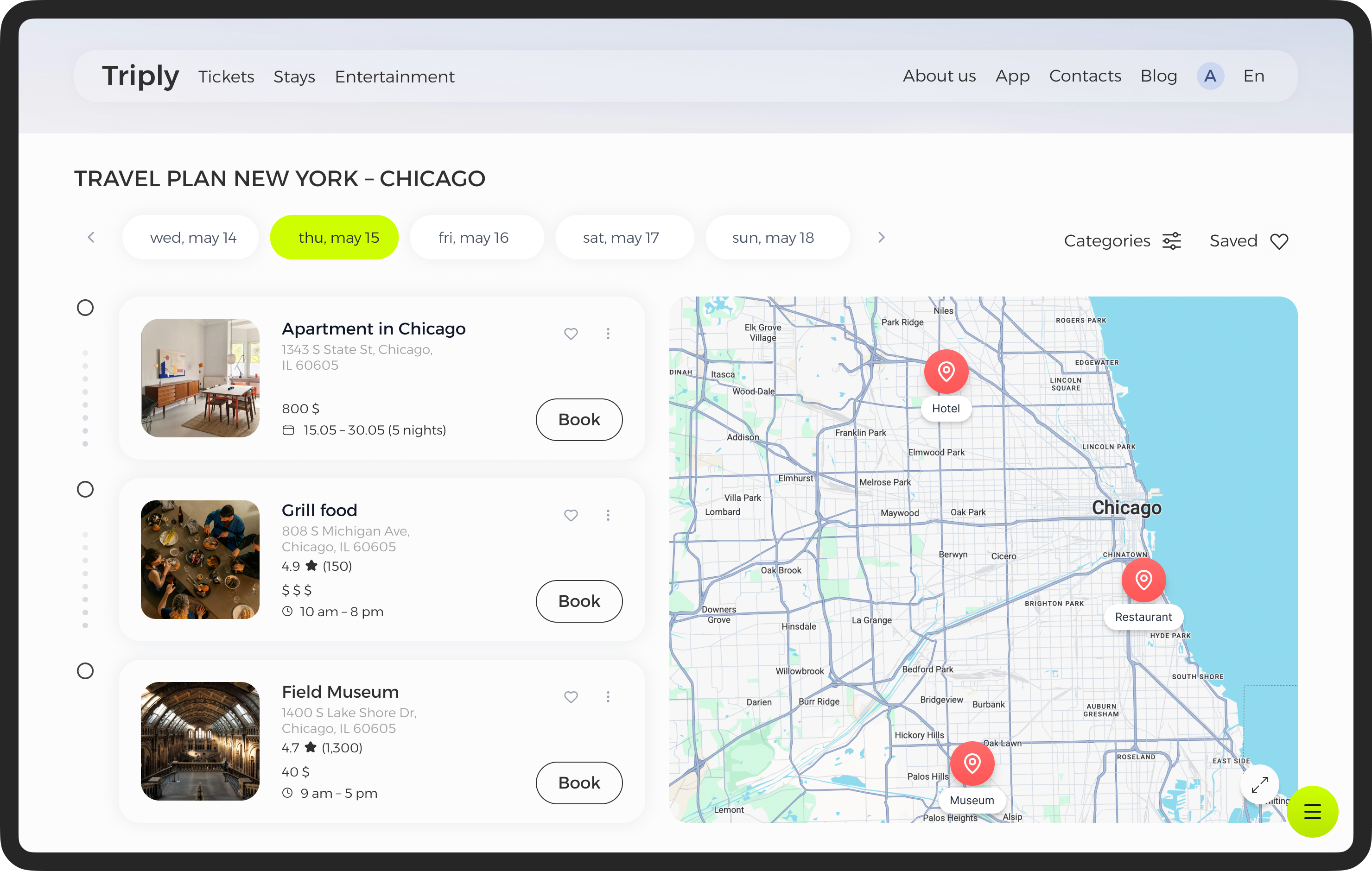
A map that visualizes the itinerary by day, showing stops and the route between them, helping users validate logistics and optimize the plan.